📅 July 2026 • ⏱ 5 min read
In today's digital world, businesses generate enormous amounts of data every single day. From customer interactions and sales transactions to website visits and social media engagement, data is everywhere. However, data alone has little value unless organizations can transform it into meaningful insights.
This is where data analytics comes in. Data analytics helps businesses collect, organize, analyze, and interpret data to make smarter decisions, reduce risks, and improve overall performance.
In this blog, we'll explore how data analytics is transforming business decision-making across industries.
Data analytics is the process of examining raw data to identify patterns, trends, and insights that can support business decisions. By using statistical techniques, visualization tools, and predictive models, organizations can understand past performance and make informed decisions about the future.
Data analytics typically involves:
Traditional business decisions were often based on intuition or assumptions. While experience still plays an important role, modern organizations rely heavily on data to validate their strategies.
Data-driven decision-making enables businesses to:
Companies that leverage data effectively can gain a significant competitive advantage.
Data analytics helps businesses understand customer preferences, buying patterns, and behavior.
Organizations can analyze:
These insights allow companies to personalize marketing campaigns, improve customer satisfaction, and increase customer retention.
Accurate forecasting is essential for business growth. Using historical sales data and market trends, data analytics helps organizations:
This reduces the chances of overproduction or stock shortages.
Marketing teams use data analytics to measure campaign performance and understand which strategies generate the best results.
Analytics helps businesses answer questions such as:
With these insights, businesses can allocate budgets more effectively.
Businesses can use analytics to identify inefficiencies in their operations. Data analytics can help organizations:
Small improvements in operational efficiency can lead to significant cost savings.
Data analytics enables businesses to identify potential risks before they become major problems. Companies can analyze data to:
Predictive analytics allows organizations to take preventive action and reduce losses.
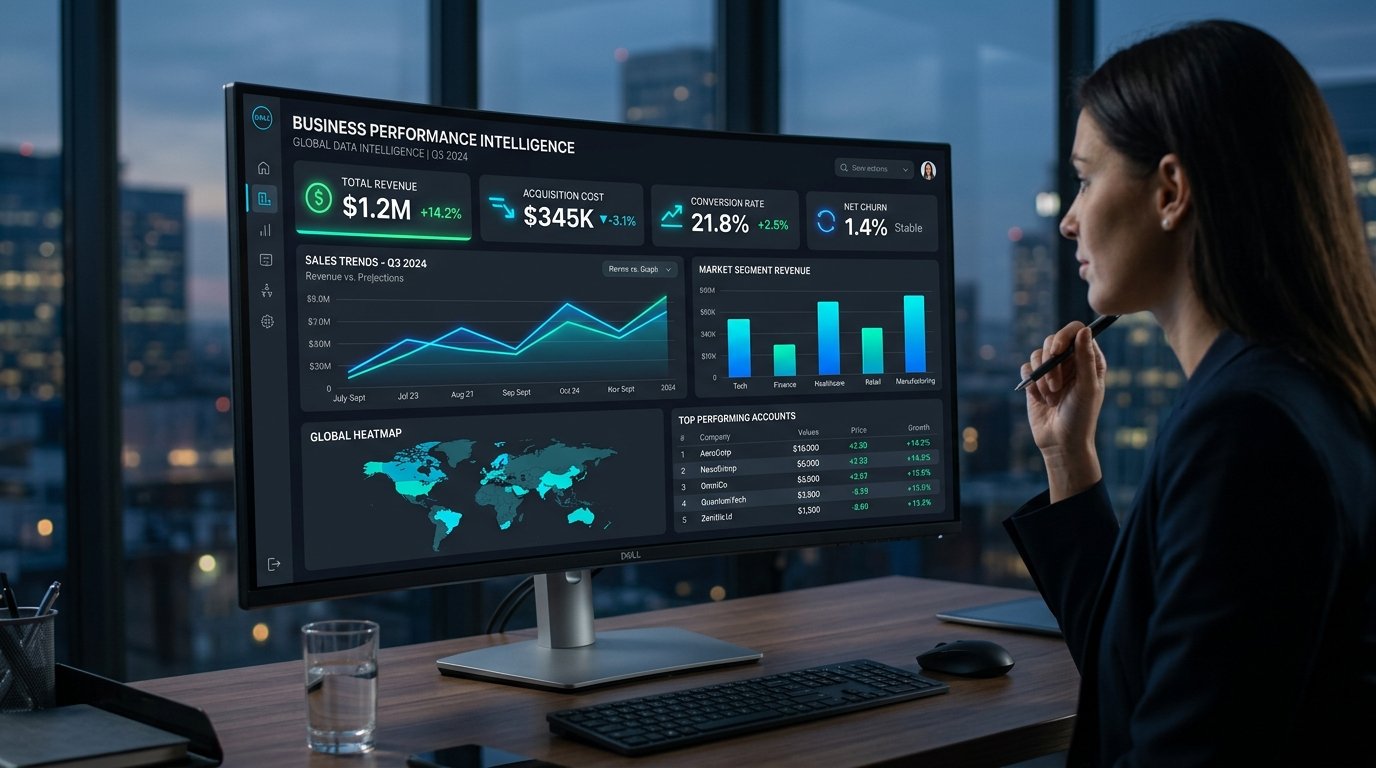
Modern businesses operate in rapidly changing markets. Real-time analytics provides decision-makers with instant insights. With dashboards and reports, managers can:
Faster decisions often lead to better business outcomes.
Data analytics is transforming multiple industries, including:
Patient data analysis, disease prediction, and hospital resource management.
Customer segmentation, inventory optimization, and personalized recommendations.
Fraud detection, credit risk assessment, and investment analysis.
Predictive maintenance, quality control, and supply chain optimization.
Student performance tracking, personalized learning experiences, and resource planning.
Professionals use various tools to analyze and visualize data, including:
As technologies like artificial intelligence and machine learning continue to evolve, data analytics will become even more powerful. Businesses will increasingly rely on predictive and prescriptive analytics to anticipate customer needs and optimize operations.
Organizations that embrace data-driven decision-making today will be better prepared for the challenges and opportunities of tomorrow.
Data analytics has become a crucial component of modern business strategy. By transforming raw data into valuable insights, businesses can make informed decisions, improve customer experiences, optimize operations, and increase profitability.
In a world driven by information, companies that effectively use data analytics are more likely to innovate, adapt, and succeed in an increasingly competitive marketplace.
The future belongs to organizations that make decisions based on data, not assumptions.
Expand your knowledge with additional systems engineering reviews.